Afterword
Your meetings, thought through.
- Reasoned answers across meetings
- Long-term workspace memory
- MCP for your AI tools
- Answers with sources
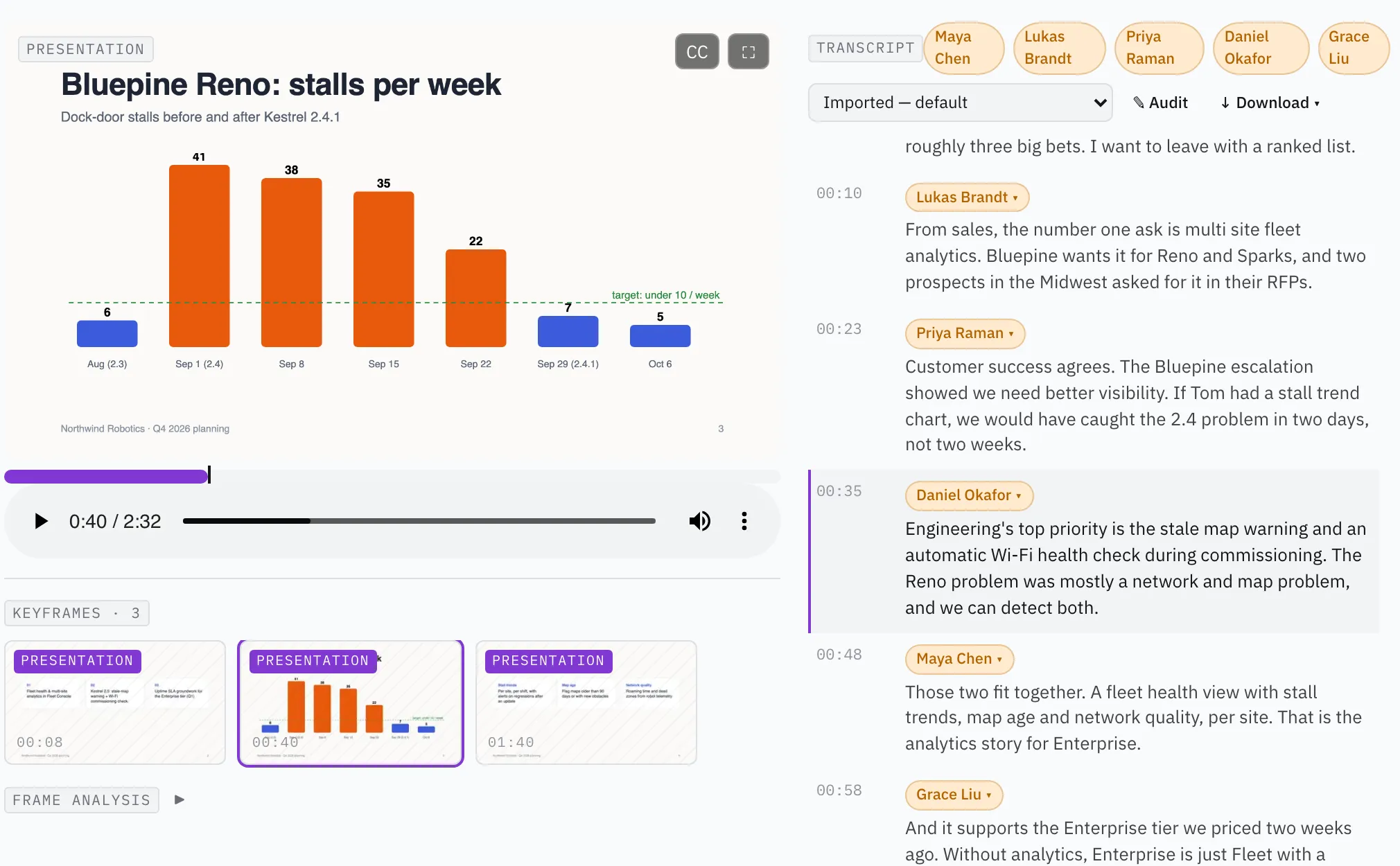
- Slide and screen understanding
- Separate, private workspaces
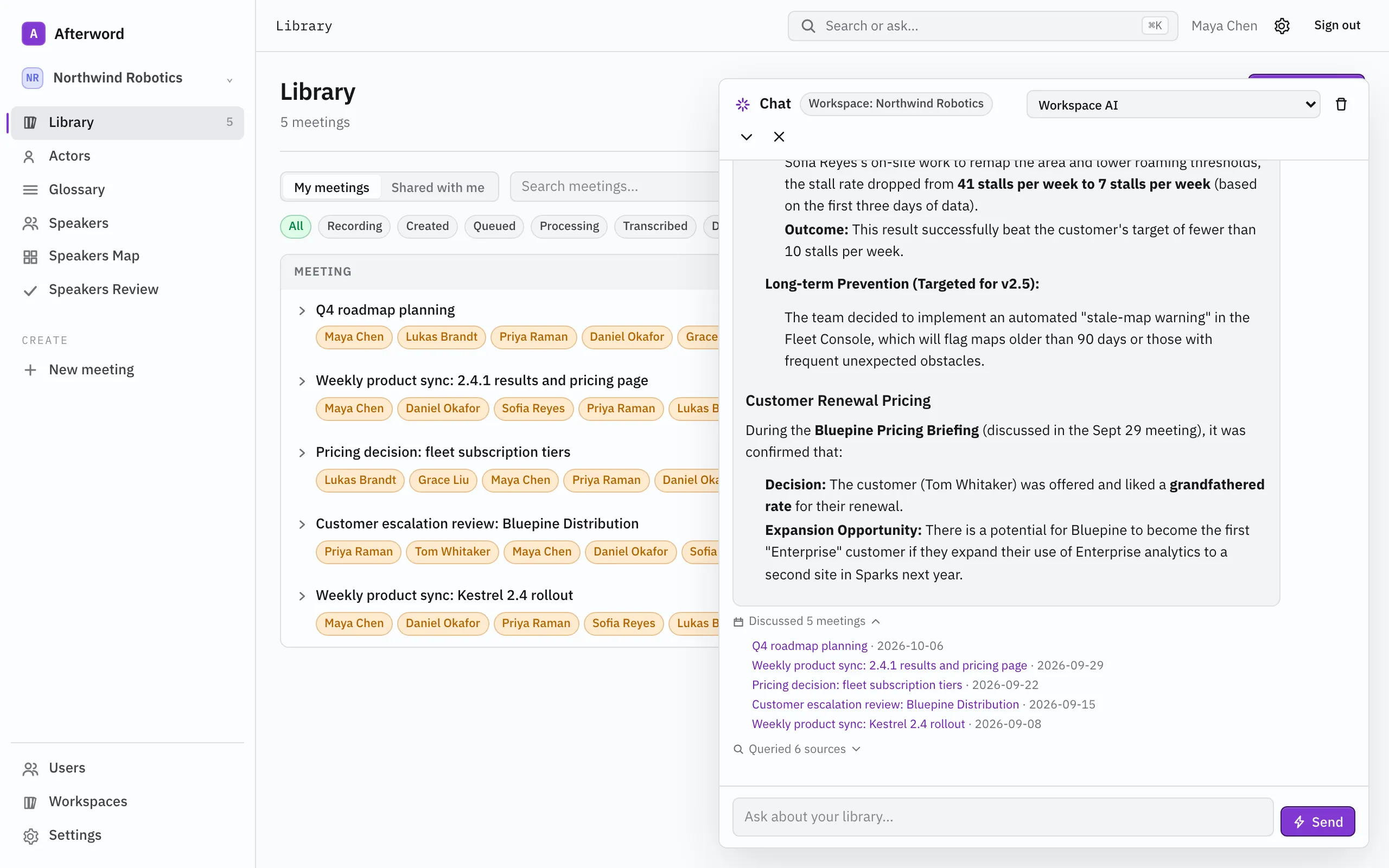
Demo workspace with invented data.
Why it matters
Most meeting tools stop at the transcript. Afterword starts there.
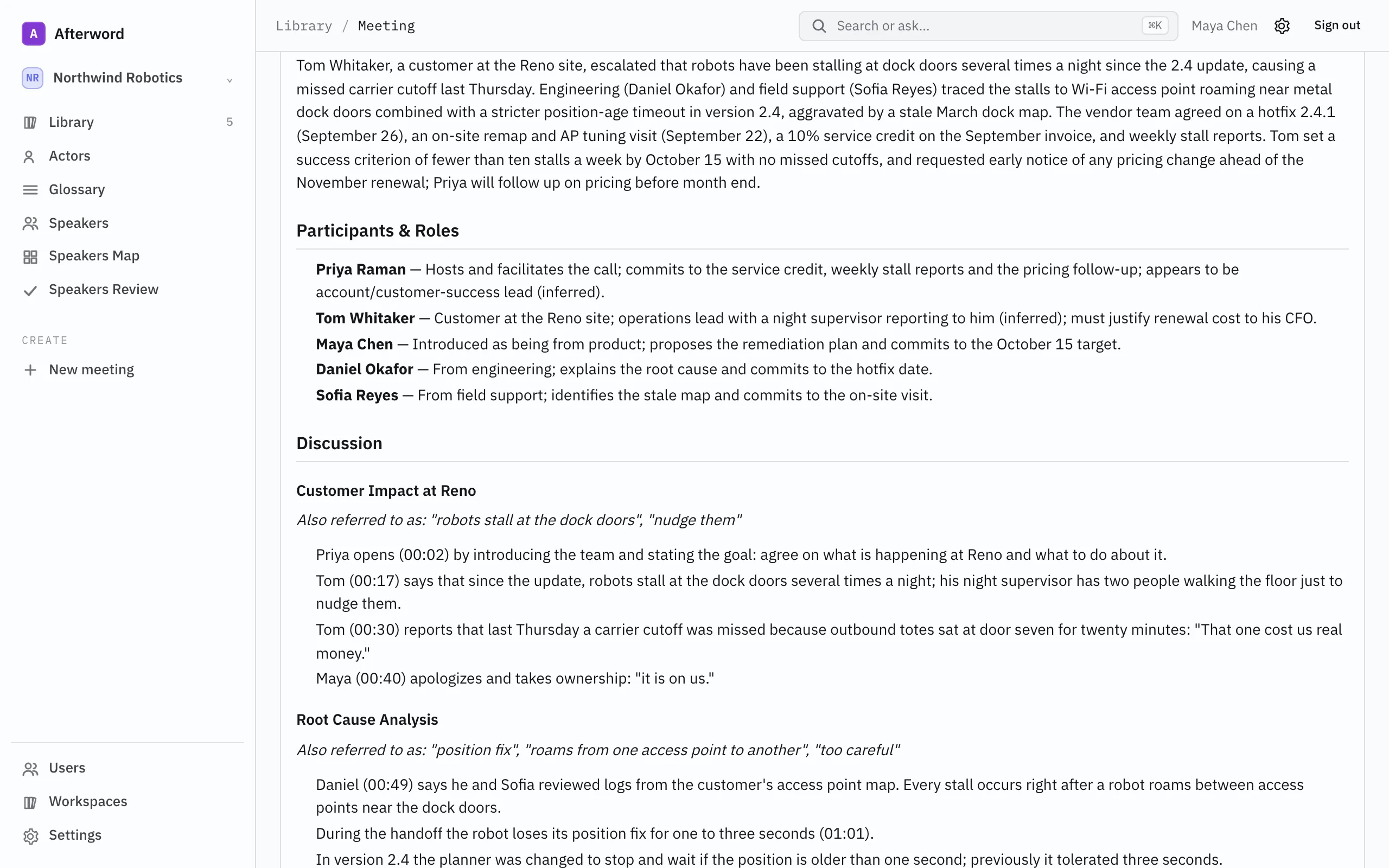
Every meeting becomes part of a living memory for your workspace, one that doesn’t just store what was said but reasons over it: connecting decisions to the people who made them, tracking how a topic evolved over weeks, and noticing what quietly fell through the cracks.
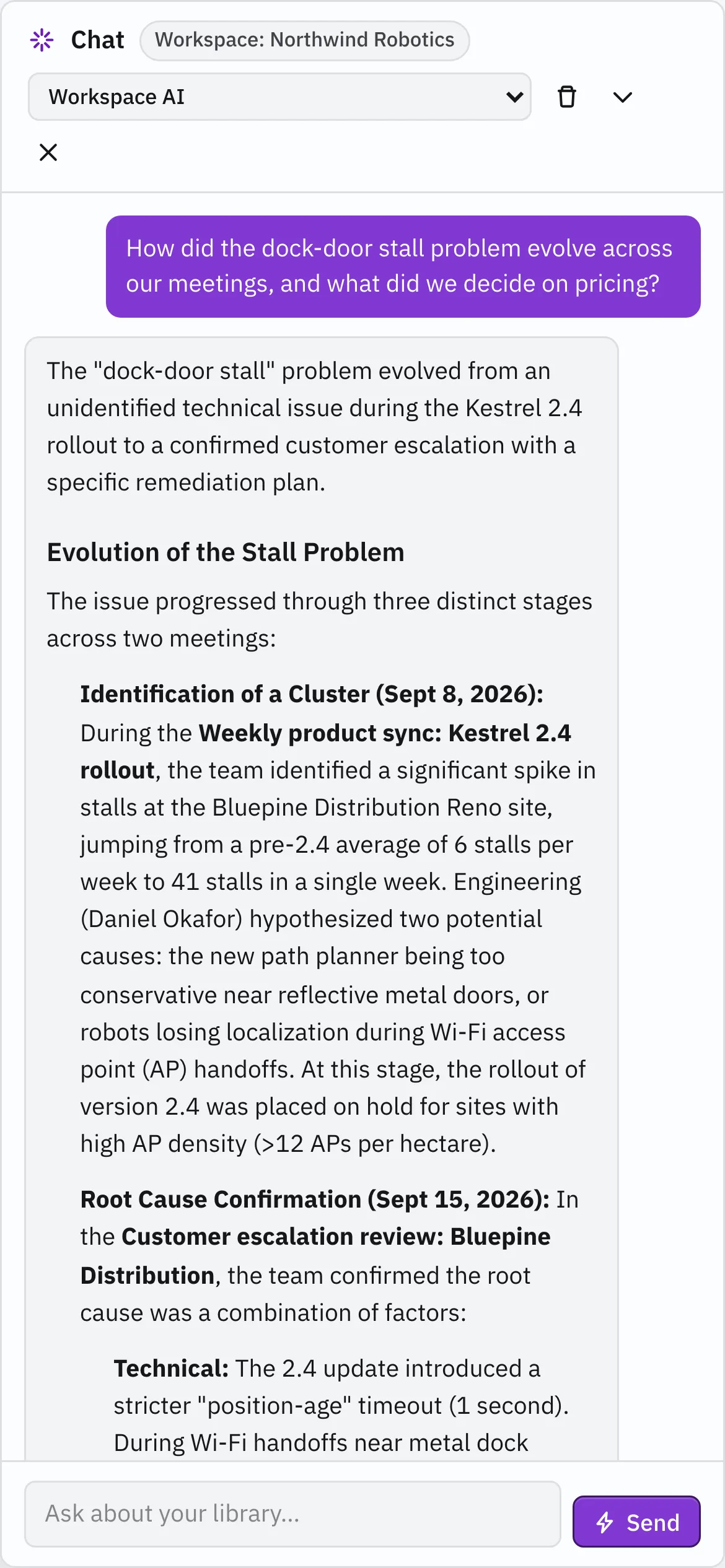
Ask a question and Afterword thinks across all of your meetings at once. “What did we promise the client in March, and did we deliver?” “Where do the team and the client still disagree?” You get a reasoned answer that pulls from every relevant conversation, with sources you can click back to, not a list of search hits.
Afterword fits into the way you already work. Through the Model Context Protocol (MCP), an open standard for AI tools, your assistants, agents and internal systems can query your meetings’ memory directly, so meeting knowledge shows up wherever your team makes decisions.
It reads the room, too: slides and shared screens are understood alongside the conversation, speakers are recognised across meetings, and every workspace keeps its own private memory, roles and sharing rules. All of it runs on our own infrastructure.
- 01
Reasoned answers across meetings
Ask once and Afterword thinks across every relevant conversation.
- 02
Long-term workspace memory
Decisions connected to the people who made them, topics tracked as they evolve, and open threads nobody closed.
- 03
MCP for your AI tools
Assistants, agents and internal systems query your meetings' memory directly through an open standard.
- 04
Answers with sources
Every answer links back to the conversations it came from, so you can check the moment it was said.
- 05
Slide and screen understanding
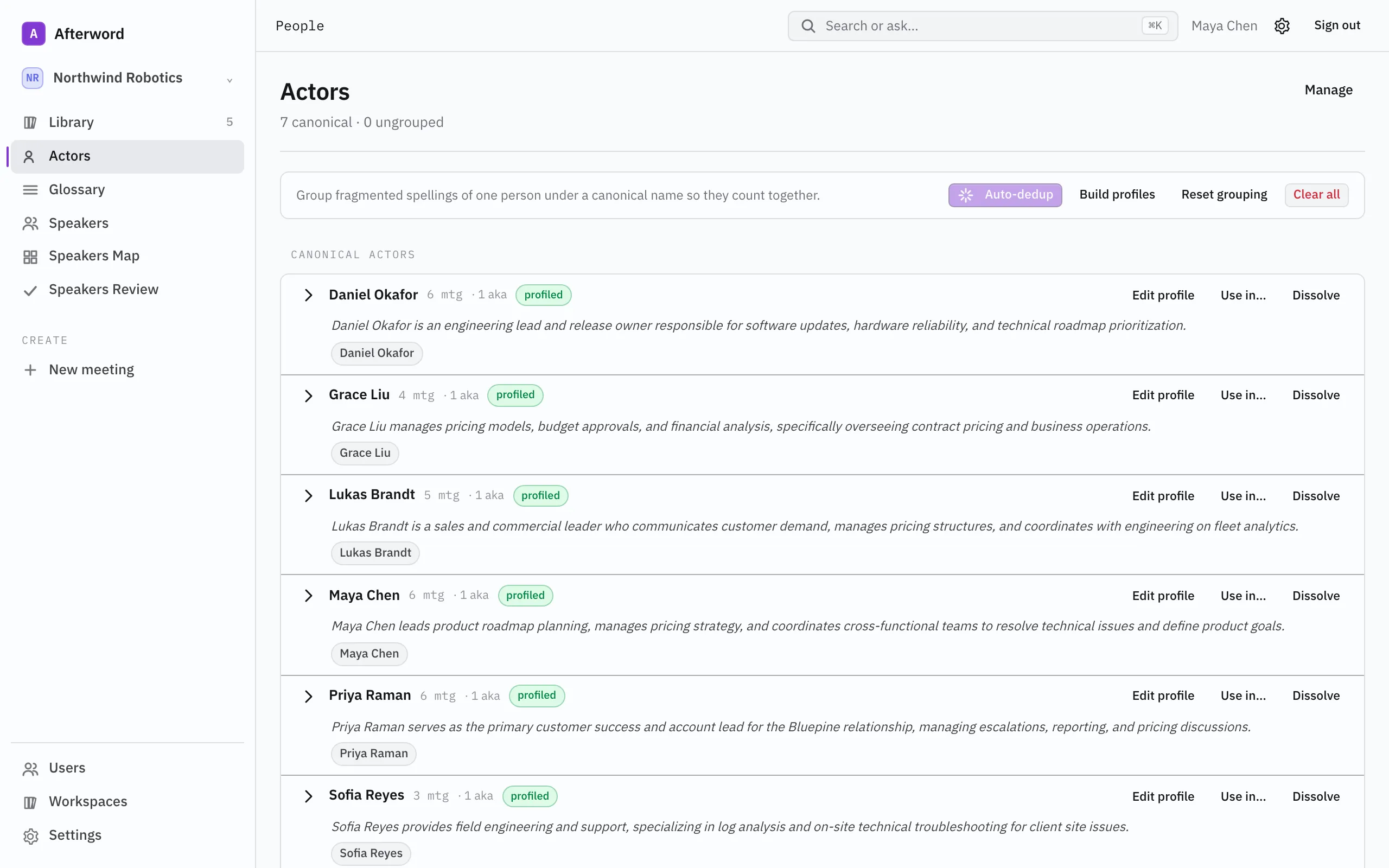
Slides and shared screens are understood alongside the conversation, and speakers are recognised across meetings.
- 06
Separate, private workspaces
Every workspace keeps its own private memory, roles and sharing rules.
Under the hood
Your conversations stay yours.
Speech and speaker recognition, the workspace memory and the language models that reason over it all run on our own infrastructure.
- ListensUnderstands the meetingWhat was said, who said it, and what was on screen.
- RemembersBuilds the memoryEvery meeting joins one long-term memory for the workspace.
- ReasonsThinks across itQuestions are answered from all relevant meetings at once, with sources.